Red Moon Rising: Your Guide to the March 3rd Total Lunar Eclipse
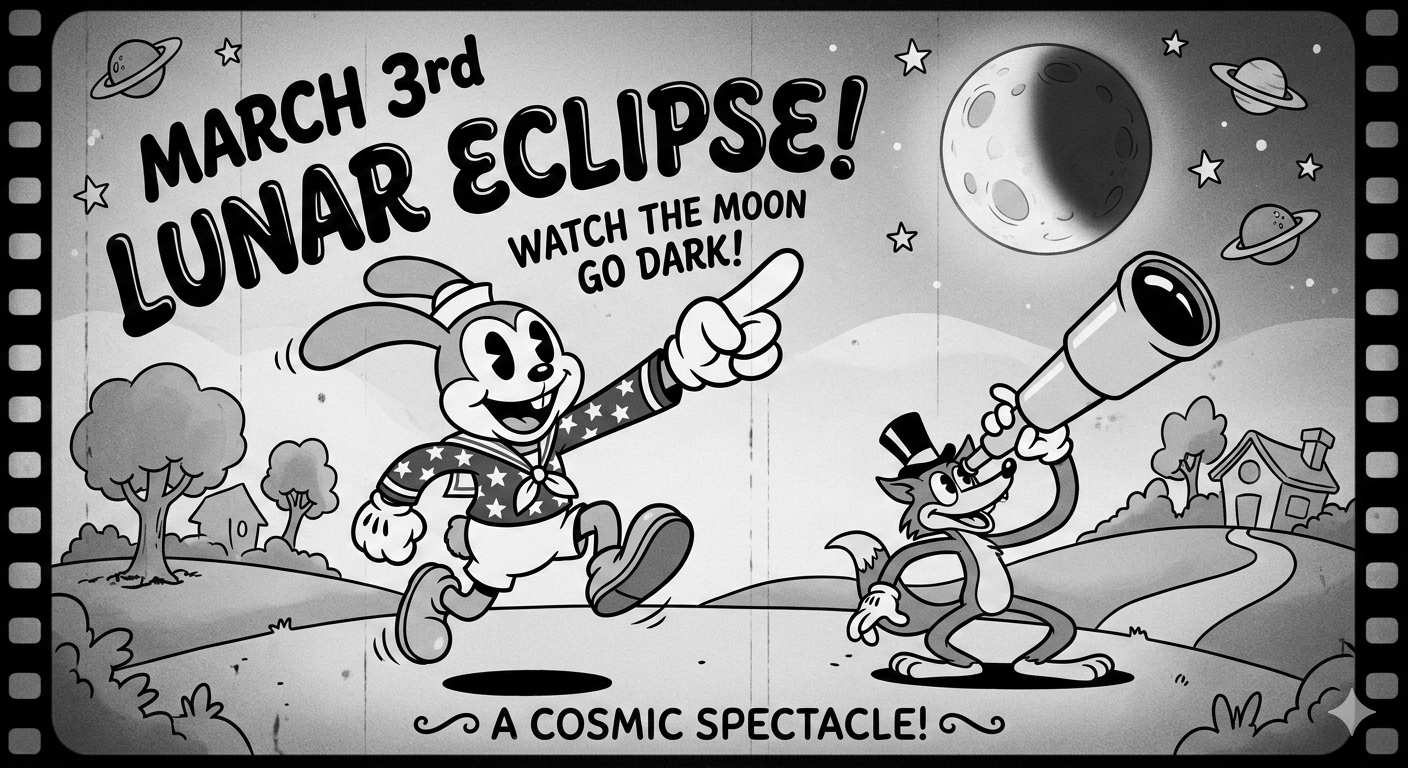
If you’re a night owl or an early riser, you’re in for a celestial masterpiece. In the early hours of Tuesday, March 3, 2026, the sky will play host to a Total Lunar Eclipse.
Often called a “Blood Moon,” this is a rare moment where the Sun, Earth, and Moon align so perfectly that our planet casts a deep, amber shadow across the lunar surface.
Why is it turning red?
It sounds like science fiction, but it’s actually physics! As the Moon passes into Earth’s shadow (the umbra), the only light reaching the lunar surface is sunlight that has been filtered and bent through Earth’s atmosphere.
Essentially, you are seeing the glow of every sunrise and sunset on Earth projected onto the Moon at the same time.
The Timeline: CST Schedule
For those of us in the Central Time Zone, this is a “set your alarm” event. The eclipse happens while the Moon is sinking low into the Western horizon.
-
3:50 AM – The “First Bite”: The partial eclipse begins. You’ll see the Moon start to dim as Earth’s shadow slowly marches across the surface.
-
5:04 AM – Totality Begins: The Moon is now fully submerged in shadow. This is when that famous reddish-orange hue becomes most vibrant.
-
5:33 AM – Peak Totality: The Moon reaches the deepest part of the shadow. Because the Moon is low in the sky at this time, it may look larger than usual—an optical illusion known as the “Moon Illusion.”
-
6:02 AM – Totality Ends: The Moon begins to emerge from the shadow just as it nears the horizon.
How to Get the Best View
Unlike solar eclipses, you don’t need special glasses or expensive filters. A lunar eclipse is perfectly safe to view with the naked eye. However, since the Moon will be low in the West, here are three tips to ensure you don’t miss it:
-
Find High Ground: Go to a spot with a clear view of the Western horizon. Avoid valleys or areas with tall buildings and dense trees.
-
Check the Weather: A single cloud can ruin the party. Keep an eye on local forecasts the night before.
-
Grab Binoculars: While not necessary, binoculars will let you see the “Ozone Fringe”—a subtle blue/turquoise tint that sometimes appears on the edge of the red shadow.
A Rare Opportunity
This isn’t just any eclipse; it’s the only total lunar eclipse of 2026. If you miss this one, you’ll be waiting quite a while for the next deep-red “Blood Moon” to grace our skies.
Pro-tip: Bring a thermos of coffee. It’s going to be a cold, early morning, but the view of a crimson moon setting against the pre-dawn sky is a memory you won’t soon forget.